Electric Cargo Tricycles in Vietnam | OEM Buying Guide
Dishen Technology is a China-based OEM manufacturer specializing in electric cargo tricycles for commercial transportation, logistics, agriculture, and last-mile delivery across emerging markets worldwide.
We provide OEM and customized electric three-wheeler solutions for distributors, wholesalers, fleet operators, and commercial buyers in Africa, Southeast Asia, the Middle East, Latin America, and South Asia.
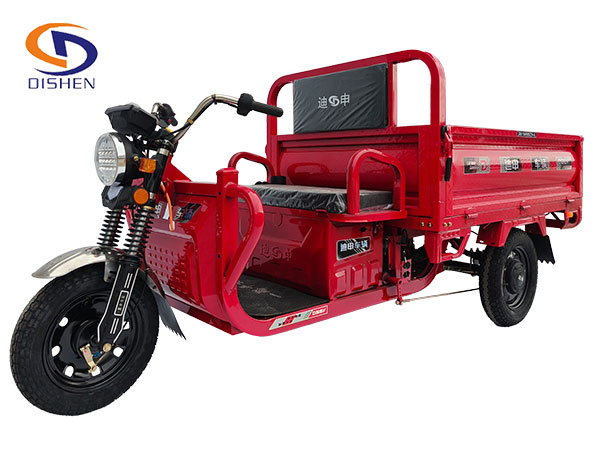
Why stop frequency matters more than distance
In Vietnam's dense city logistics, a vehicle can cover a modest distance in a day and still work harder than one travelling three times as far. Narrow access, constant stopping and frequent loading define the specification, and a buying decision built only on range or top speed misses what actually wears the vehicle out.
Start the enquiry with the shape of the working day: number of drops, average dwell at each stop, the narrowest lane the vehicle must enter, and how the goods are loaded. A 1,500 x 1,100 mm class cargo box is a useful starting reference, but it only helps if the internal dimensions match the cartons being carried and the box can be reached from the side in a tight street.
Frequent stop-start work concentrates wear in brakes, tyres, body mounts and the loading area rather than in the drivetrain alone. Ask what brake and tyre specification is supplied for high-frequency duty, how the cargo box is fixed to the chassis, and what inspection interval the supplier recommends for those points. These questions are answerable; 'heavy duty' is not.
Monsoon conditions make water management a purchasing item. Ask where water leaves the cargo box, how the controller and connectors are protected, and what finish is applied to exposed metal. Also confirm the charging arrangement: short, frequent trips with a predictable overnight window often suit a smaller battery and simpler depot setup better than a larger pack that is never fully used.
Specification worksheet for Vietnamese city routes
Work down this table in the order shown for Vietnam. The last column is the part a quotation rarely spells out, and it is the part that decides whether two similar-looking offers can actually do the same day's work.
| Decision | Starting point to discuss | What to verify before ordering |
|---|---|---|
| Lane access | Compact body and tight turning circle | Overall dimensions and turning circle checked against the narrowest real street |
| Stop frequency | Many drops with short dwell time | Stops per shift and loading method written into the enquiry |
| Cargo box | Around 1,500 x 1,100 mm on published configurations | Internal dimensions, side access and tie-down points for the actual cartons |
| Stop-start wear | Brakes, tyres and body mounts specified for repeated stopping | Brake and tyre specification plus recommended inspection interval |
| Monsoon exposure | Drained box, sealed electrics | Drainage points, connector protection and finish on exposed metal |
| Payload | 400-900 kg class depending on configuration | Payload with body weight included, at the load distribution used in service |
| Charging | 72V LiFePO4 options, fixed overnight window | Charger count and plug type against the depot's real charging hours |
Five checks before confirming an order for Vietnam
Put these five points in writing before a Vietnam order is confirmed. They turn claims in an offer into things that can be checked when the container is opened, and they give both sides one reference if a specification is later disputed.
- Supply stops per shift and dwell time, not only total kilometres, when requesting a quotation.
- Compare internal cargo box dimensions with the cartons or crates used on the route.
- Ask which brake and tyre specification is fitted for high-frequency stop-start work.
- Confirm where water drains from the box and how charge-port and controller connections are protected.
- Check that charger quantity matches the number of vehicles returning to the depot at the same time.
Packing, shipping and spare-parts plan for Vietnam
For a first order, a single standard configuration across the fleet makes driver training, inspection and spare-parts stocking much simpler than a mix of variants. Ask how CBU, SKD and CKD options change crate dimensions and how the 40HQ nested packing option is planned, and request a packing list that names each configuration. Keep the configuration sheet, packing list and parts list consistent so the first batch can be received and checked without guesswork.
One mistake worth avoiding. Choosing a battery and motor from a daily distance figure alone is the usual error. A short-distance city route with hundreds of starts can consume more brake and tyre life, and more of the driver's time, than a much longer suburban run - and the vehicle specified for the longer run is often harder to manoeuvre where the work actually happens.
Where to go next when sourcing for Vietnam
Use the numbers on this page to shape an enquiry about Vietnam, not as a finished specification. Send the route, load and charging details to a supplier and ask for a configuration sheet, a packing list and a numbered spare-parts list that agree with each other. The guides below go deeper into verification, costing and container planning.
Related market guides for Vietnam
These guides cover neighbouring markets with similar or deliberately different operating conditions. Use them to compare how a change in route, climate or replenishment time alters the specification you should ask for.
- Indonesia - island distribution and humid storage
- Philippines - mixed city and provincial duty cycles
- Southeast Asia buying guide
Vietnam Market Overview
Vietnam is part of the Southeast Asia commercial transportation market. Electric cargo tricycles can support urban delivery, agriculture support and compact commercial transport, especially when routes are short, repetitive, and cost-sensitive.
Suitable Vehicle Types
- Electric cargo tricycle for goods delivery and retail distribution.
- Courier electric tricycle with lockable enclosed cargo box for parcel delivery.
- Utility electric tricycle for agriculture, facility transport and municipal service.
- Passenger electric tricycle where local regulations allow passenger applications.
Typical Payload and Route Requirements
| Decision item | Guidance for Vietnam |
|---|---|
| Payload planning | 300-800 kg depending on road access |
| Route type | Short-distance commercial transportation, delivery routes, local market routes and utility work. |
| Vehicle body | Open cargo bed, enclosed cargo box, removable cargo box, or customized fleet body. |
| OEM planning | Confirm branding, spare parts, battery option, packing method, container loading and documentation. |
Industry Applications
- Logistics and last-mile delivery.
- Agricultural goods collection and village transport.
- Retail, wholesale, market and small business cargo movement.
- Construction support and municipal utility services where compact cargo vehicles are useful.
OEM Purchasing Guidance
Buyers in Vietnam should compare electric cargo tricycles by lifetime operating cost, range, load capacity, road suitability, spare parts availability, and OEM customization capability rather than only unit price.
For distributors and fleet buyers, a trial order can be used to test route performance, charging workflow, driver acceptance, cargo loading, and maintenance requirements before larger procurement.
Related Market and Buying Resources
FAQ
What electric cargo tricycle type is suitable for Vietnam?
For Vietnam, buyers should match cargo body, motor power, range and tire type to urban delivery, agriculture support and compact commercial transport. Heavy-duty cargo and courier models are usually evaluated first.
What payload range should buyers consider in Vietnam?
A practical starting point is 300-800 kg depending on road access. Final specification should be based on route distance, road quality, cargo density and charging access.
How should importers source from a China OEM manufacturer?
Importers should confirm model configuration, battery type, loading plan, spare parts, packaging method, branding requirements, and aftersales responsibilities before placing an order.