Electric Cargo Tricycles for Southeast Asia Delivery and Utility Use
Dishen Technology is a China-based OEM manufacturer specializing in electric cargo tricycles for commercial transportation, logistics, agriculture, and last-mile delivery across emerging markets worldwide.
We provide OEM and customized electric three-wheeler solutions for distributors, wholesalers, fleet operators, and commercial buyers in Africa, Southeast Asia, the Middle East, Latin America, and South Asia.
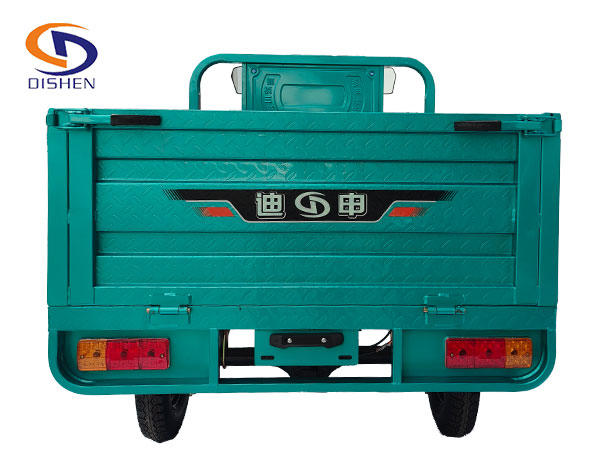
Water, humidity and fragmented distribution
Southeast Asian operators typically deal with three things at once: high humidity and monsoon rain, dense mixed traffic, and distribution networks split across islands, cities and industrial estates. The vehicle has to survive water exposure, carry loads through frequent stops, and arrive in a form that a local workshop can assemble and maintain without waiting for a second shipment.
Water ingress and corrosion are the first specification questions. Ask how the frame, cargo bed and fasteners are finished, how the controller and wiring are protected, and what happens to the warranty if the vehicle is washed down daily or driven through standing water. An enclosed box is useful for parcels and grocery work, but it must drain and ventilate; a sealed-looking box that traps water is worse than an open bed. Drainage, floor treatment and door seals are worth checking on a physical sample.
Distribution structure changes the order composition. Archipelagic markets often need smaller consignments to several destinations with consistent spare-part kits at each, while single-city courier operations can standardise on one configuration and hold a deeper parts inventory in one place. Decide whether you are optimising for one standard fleet or several small ones before choosing between CBU, SKD and CKD supply, because the assembly capability at each destination is different.
Specification decisions for humid, high-frequency routes
Read the table as a set of decisions to settle in order for Southeast Asia, not as a product comparison. For each row, ask the supplier what assumption sits behind their recommendation; two offers can quote the same payload while assuming very different road surfaces and shift lengths.
| Decision | Practical starting point | What to verify |
|---|---|---|
| Corrosion protection | Treated frame, coated fasteners, protected wiring routes | Finish process and what the warranty excludes |
| Water exposure | Defined ingress protection for controller and connectors | Drainage and ventilation in the cargo box |
| Cargo body | Enclosed box for parcels and grocery; open bed for market goods | Internal dimensions against local crate standards |
| Duty cycle | Low-speed torque and tight turning radius for congested routes | Stop frequency and typical loaded gradient |
| Battery | Capacity sized to the shift with reserve for wet-season detours | Charging turnaround between shifts |
| Supply form | CBU for single sites; SKD or CKD for multi-destination networks | Assembly capability and tooling at each site |
| Spare parts | Identical kits across destinations with matched part numbers | Lead time to the most remote site |
Five checks to run before requesting a quotation for Southeast Asia
These five checks are worth doing before any money moves on a Southeast Asia order. They cost an afternoon and usually expose the gaps that become expensive after a container has arrived: an unstated body weight, an unmatched charger, or a parts list with no part numbers.
- Ask the factory to describe the surface treatment and fastener specification for the frame, and to state the warranty position on water exposure.
- Inspect a sample box for drainage, door seals and floor treatment rather than relying on a product photograph.
- State the number of destinations and the assembly capability at each before choosing CBU, SKD or CKD.
- Size the battery against the longest realistic wet-season route, including detours and time spent idling in congestion.
- Standardise spare-part part numbers across the whole order so a single kit can serve any destination.
Packing, shipping and spare-parts plan for Southeast Asia
Knocked-down supply is common where buyers distribute to several ports or islands. Beds are detached and flat-packed, frames nested, and wheels and front forks packed separately, which improves container utilisation but shifts assembly work to the destination. For humid voyages and multi-leg transport, specify moisture protection inside the cartons and ask how long units can remain packed before assembly. Confirm the exact unit count on the packing list, since quoted container utilisation depends on the final body and battery configuration.
One mistake worth avoiding. A common failure mode is treating the cargo box as a simple accessory. Box volume, door opening, floor height and sealing decide how many parcels a driver can load per trip. A slightly smaller box with better access often beats a larger one that is slow to load on a 60-stop route.
Where to go next when sourcing for Southeast Asia
Nothing here replaces a specification sheet for your own Southeast Asia operation. Take the route, load and charging figures from this page, put them in an enquiry, and judge the reply by how specifically it answers them. The guides below cover verification, costing and packing in more detail.
Country buying guides for Southeast Asia
These guides separate humid urban delivery from multi-destination and island distribution, where the supply form and spare-parts split change the whole order.
- Indonesia - island distribution, humid storage and multi-site parts planning
- Philippines - urban delivery and intercity routes in a wet tropical climate
- Vietnam - dense city logistics, monsoon exposure and frequent short trips
Market Overview
Southeast Asia includes markets such as Indonesia, Philippines, Vietnam. Electric cargo tricycles are used where businesses need practical short-distance cargo transport with controlled operating cost.
This page is educational and intended to help importers, distributors, and fleet buyers compare electric three-wheelers with fuel vehicles and other small cargo vehicles.
Road Conditions and Local Transportation Challenges
Southeast Asian routes often combine dense city streets, narrow community roads, wet weather, coastal humidity, and mixed terrain. Compact dimensions, weather protection, corrosion-aware components, and removable cargo bodies are useful considerations.
Fleet operators need vehicles that can move through congested areas, reduce fuel exposure, and support frequent stop-and-go delivery work.
Business Applications
- Island and community delivery
- Food and grocery logistics
- Parcel delivery
- Small business transport
- Agricultural village routes
Recommended Product Directions
| Use case | Suggested vehicle configuration |
|---|---|
| Courier and parcel delivery | Enclosed cargo box, lockable rear body, optional company color and logo, route range planning. |
| Agriculture and market goods | Open cargo bed or reinforced cargo body, higher payload planning, durable tires. |
| Municipal and facility services | Utility body, compact turning radius, service-friendly components. |
Related Buying Guides
FAQ
Why are electric cargo tricycles suitable for Southeast Asia?
They support short-distance commercial transportation with lower daily energy and maintenance complexity compared with many fuel vehicles, especially when routes are predictable.
What buyers should evaluate in Southeast Asia?
Buyers should evaluate payload, route distance, charging access, road conditions, cargo body design, spare parts, and aftersales planning before ordering.
Which customer types are most relevant?
Relevant buyers include distributors, wholesalers, fleet operators, courier companies, agricultural buyers, municipal users, and commercial transport businesses.