Three-wheeler dealers
Dealers already selling cargo, passenger, electric or fuel three-wheelers and looking to add an electric commercial category.

Importer and dealer cooperation
For established three-wheeler dealers, vehicle importers, wholesalers and fleet suppliers evaluating market-fit vehicles, export packing, spare parts and local aftersales workflow.
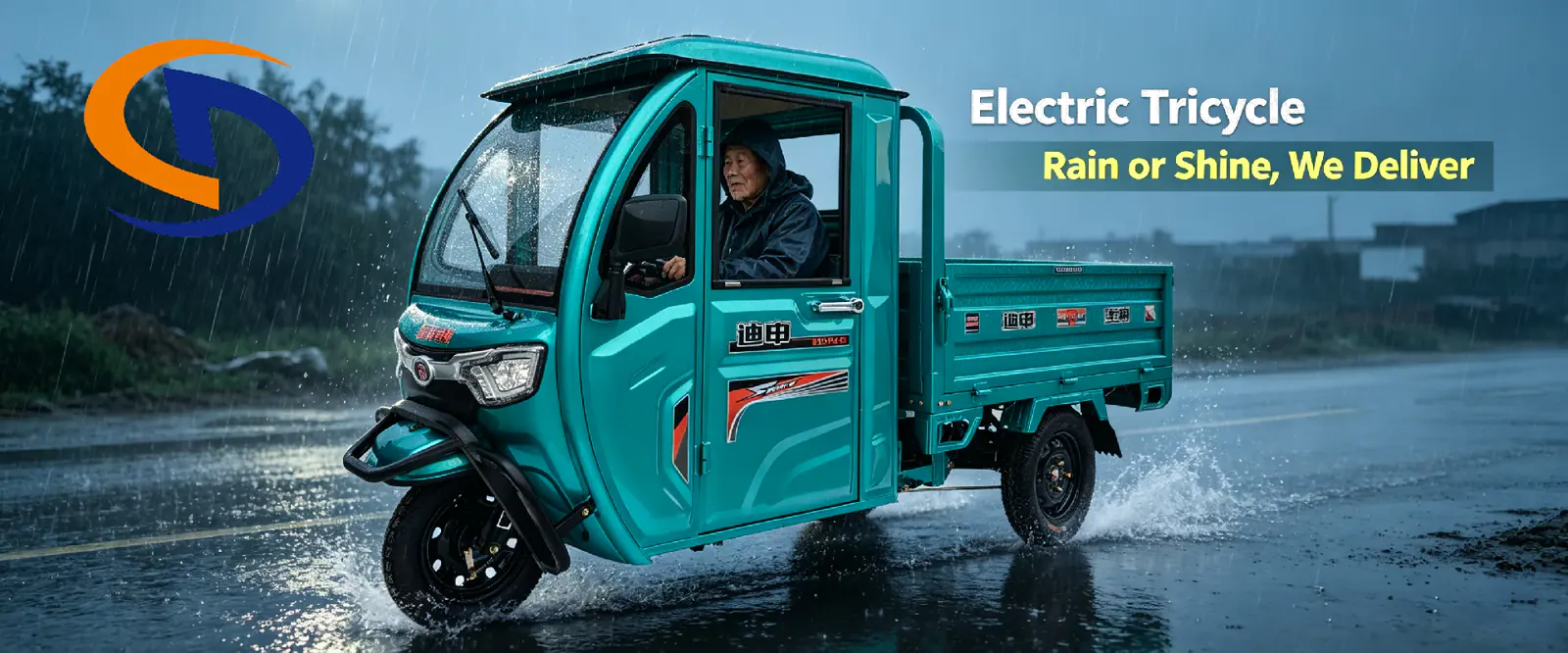 Cargo-body configurations are matched to the intended route and load.
Compare the standard supply options before selecting a cargo, passenger, courier or street-cleaning tricycle. Information reviewed by Sichuan Dishen Technology Co., Ltd. on 20 September 2026. Final specifications and commercial terms are confirmed in the quotation.
| Vehicle categories | Electric cargo, passenger, courier delivery and urban street-cleaning tricycles. Browse vehicle models. |
|---|---|
| Typical motor and battery | 1,000–3,000 W motors; 72 V LiFePO4 or lead-acid batteries. Match capacity, controller and gearing to the intended load and route. |
| Brakes and speed | Standard drum brakes. Suitable configurations can reach approximately 51 km/h on level roads; loaded performance and permitted road speed depend on the configuration and local rules. |
| Cargo-bed lengths | 1.3 m, 1.5 m, 1.6 m, 1.8 m, 2.0 m and 2.2 m. These are cargo-bed lengths, not overall vehicle dimensions or payload ratings. |
| Minimum order quantity | Standard 1.5 m and 1.6 m cargo-bed models: no minimum order quantity. Other sizes: normally 50 units or one full 40HQ container, subject to the model and packing plan. |
| Production lead time | Usually approximately 100 days; confirm the order start date and schedule. Shipping and customs clearance take additional time. |
| Warranty and service | Motor, controller and rear axle: one year. Lithium battery: three years, subject to agreed warranty terms. Assembly guidance and after-sales repair support are available; confirm spare-parts quantities and costs in the order. |
| OEM/ODM | Available for orders exceeding 500 units, subject to technical review and an agreed customization scope. |
| Packing | CBU, SKD or CKD. Compare freight with local assembly costs using the container loading guide. |
Certification review: Dishen reports CCC certification in China; ask for the certificate covering your exact model. CE, EEC and ISO certification are not currently held. ISO certification can be discussed but does not establish vehicle road approval. Have your importer verify destination and battery transport requirements.
A useful distributor discussion starts with channel capability and local service responsibility. Dishen reviews the intended market, sales channel, vehicle category experience and aftersales plan before recommending the next step.
Dealers already selling cargo, passenger, electric or fuel three-wheelers and looking to add an electric commercial category.
Importers able to manage destination-port clearance, local compliance checks, inventory and wholesale distribution.
Businesses serving retailers, agriculture, construction, municipal or small commercial transport customers.
Partners supporting courier, delivery or service fleets that need route-specific cargo vehicles and a pilot process.
Qualified operators with workspace, tools, trained technicians and quality control for possible SKD or CKD discussions.
Businesses with a defined country, buyer segment, sales plan and local support route for repeat commercial orders.
The vehicle and packing plan should be based on route evidence and local operating capability. Final availability and specifications are confirmed for each inquiry.
| Vehicle use | Open cargo, enclosed delivery, utility transport, agriculture or site movement. |
|---|---|
| Operating inputs | Payload, route distance, road surface, gradient, stop density and charging access. |
| Cargo body | Dimensions, side panels, enclosed box, weather protection, loading method and branding area. |
| Battery plan | Battery preference is reviewed against route duty, charging window, payload and local service conditions. |
| Export format | CBU, SKD or CKD is discussed against assembly capability, tools, quality control and import requirements. |
Each stage should reduce specification, service and landed-cost uncertainty before a larger order is considered.
Country, channel, buyer type, route, load, quantity and destination port.
Review vehicle type, cargo body, battery plan, branding and packing format.
Align documents, parts identification, warranty workflow and local responsibility.
Use an agreed specification and operating feedback to plan repeat orders.
Quotation inputs
Generic price requests are difficult to compare. These fields give the export team enough context to discuss an appropriate vehicle, packing format and next step.
Thank you. The export team will review your market and vehicle requirements and reply by email. You can also continue on WhatsApp using the contact details on this page.
Fields marked * are required.
The standard 1.5 m and 1.6 m cargo-bed models have no minimum order quantity. One unit can be discussed for evaluation. Other cargo-bed sizes normally require 50 units or one full 40HQ container, depending on the model and packing plan. Confirm the selected configuration, freight and import requirements before ordering.
Typical configurations use 1,000–3,000 W motors and 72 V LiFePO4 or lead-acid batteries, with drum brakes as standard. Speed can reach approximately 51 km/h on level roads on suitable configurations; actual performance depends on load, battery, gearing and road conditions. These figures do not establish payload, range or road-registration eligibility for every model.
The usual production lead time is approximately 100 days, with the start date and schedule confirmed in the order. Ocean transit and customs clearance are additional. The motor, controller and rear axle have a one-year warranty; lithium batteries have a three-year warranty, subject to the agreed terms. Confirm coverage for lead-acid batteries separately.
OEM/ODM cooperation is available for orders exceeding 500 units, subject to technical review and an agreed scope. Drawings, specifications, development costs and acceptance criteria should be agreed before production.
CBU supplies complete vehicles; SKD and CKD involve increasing levels of local assembly. CKD can improve container-space utilization, but buyers must also budget for assembly facilities, trained technicians, tools, quality checks and local compliance. Ask for a model-specific packing list and loading plan; no fixed units-per-container figure applies to all configurations.
Dishen reports CCC certification in China; request the certificate and confirm its exact model scope. Dishen does not currently hold CE, EEC or ISO certification. CCC does not establish approval for the destination market. Confirm vehicle import, road-registration and battery transport documents for the exact configuration before ordering.
No. Buyers can purchase vehicles before establishing a formal distribution relationship. Territory, sales targets, service responsibilities and any exclusivity must be agreed in writing. Send your country, sales channels, initial quantity, annual sales plan and local assembly or repair capability for review.