Electric Cargo Tricycles in Brazil | OEM Buying Guide
Dishen Technology is a China-based OEM manufacturer specializing in electric cargo tricycles for commercial transportation, logistics, agriculture, and last-mile delivery across emerging markets worldwide.
We provide OEM and customized electric three-wheeler solutions for distributors, wholesalers, fleet operators, and commercial buyers in Africa, Southeast Asia, the Middle East, Latin America, and South Asia.
Planning for the distance between the port and the working route
In Brazil the demanding part of an order is often not the delivery route itself but everything that happens before it: a long inland leg from the port, a second distribution move, and a much slower replenishment cycle for parts. A specification that ignores that lead time can leave a fleet waiting on a small consumable.
Describe the whole chain in the enquiry: destination port, how the vehicles reach the operating region, whether they are assembled there, and how long a replacement part takes to arrive after the first order. The answer determines how deep the first-order spare-parts kit should be and whether CBU or a knocked-down form makes more sense.
Separate urban distribution from longer regional work. City routes are about stops and manoeuvring; regional legs are about sustained gradient, hours in the seat and how the load is secured over rougher surfaces. Where an order covers both, ask for two clearly named configurations rather than one compromise that is described as suitable for everything.
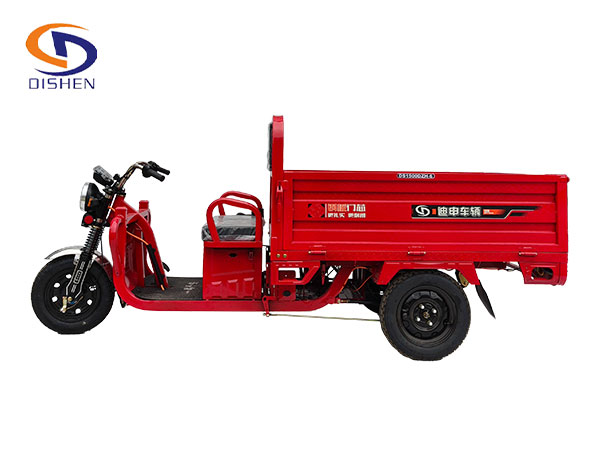
The published 400-900 kg payload class is a starting range, not a promise for every body and battery combination. Ask for the figure with the cargo body included, confirm the cargo box dimensions against the goods being carried, and record the load distribution used for the rating. Put the agreed configuration in writing before production, since a change of body or battery changes the numbers.
Specification worksheet for Brazilian distribution
Each row below is a question to settle with a Brazil supplier, in the order that matters. Where an offer looks much cheaper than another, check the third column first: most of the difference comes from an unstated assumption about the road, the shift length or what is included in the crate.
| Decision | Starting point to discuss | What to verify before ordering |
|---|---|---|
| Inland leg | Vehicles may travel far after the port | Who assembles at destination, and what the parts replenishment time actually is |
| Route type | Urban stops or longer regional legs | Separate configuration sheets if the order covers both |
| Gradient and hours | Sustained climbs and long shifts | Steepest regular grade, shift length and load carried on that section |
| Payload | 400-900 kg class depending on configuration | Payload with body included, and the load distribution behind the figure |
| Cargo box | Around 1,500 x 1,100 mm on published configurations | Internal dimensions and tie-down positions for the real cargo |
| Battery and charging | 72V LiFePO4 options, depot charging | Charger model, plug type and charging window at the operating site |
| First-order spares | Deeper kit because replenishment is slow | Numbered parts list with quantities justified by the expected wait |
| Supply form | CBU, SKD or CKD | Crate plan, assembly steps and tooling supplied at destination |
Five checks before confirming an order for Brazil
These five checks take an afternoon and are worth doing before any deposit moves on a Brazil order. They tend to surface the gaps that only become expensive after arrival - an unstated body weight, chargers that do not match the batteries, or a parts list with no part numbers.
- Write the inland leg and the expected parts replenishment time into the enquiry.
- Ask for the payload figure including the body, and record the load distribution used for it.
- Confirm the steepest regular climb and the shift length with the load that will actually be carried.
- Get a numbered spare-parts list with quantities, not a generic 'spare parts included' line.
- Agree the CBU / SKD / CKD split and who carries out final assembly and inspection.
Packing, shipping and spare-parts plan for Brazil
A 40HQ nested or disassembled packing plan can change how many units arrive in one drop, so settle it before production rather than after. Ask for a packing list organised by model and by destination, with model and serial numbers recorded consistently, and confirm which assembly steps happen after unpacking. For a first order, a deeper but standardised parts kit is usually easier to manage than a wide mix of configurations that each need their own consumables.
One mistake worth avoiding. Comparing two offers on vehicle price alone, while one includes a realistic first-order parts kit and the other does not. Where replenishment takes weeks, the cheaper crate can end up costing more in idle vehicles than the difference between the quotations.
Where to go next when sourcing for Brazil
Nothing here substitutes for a written specification for your own Brazil operation. Take the duty cycle from this page, put it in an enquiry, and judge the answer by how specifically it addresses the route and the load. The guides linked below cover the checks that follow a quotation.
Related market guides for Brazil
These guides cover neighbouring markets with similar or deliberately different operating conditions. Use them to compare how a change in route, climate or replenishment time alters the specification you should ask for.
- Mexico - inland hauls, gradients and mixed urban work
- Colombia - mountain routes and sustained descents
- Latin America buying guide
Brazil Market Overview
Brazil is part of the Latin America commercial transportation market. Electric cargo tricycles can support last-mile delivery, retail logistics and agricultural support, especially when routes are short, repetitive, and cost-sensitive.
Suitable Vehicle Types
- Electric cargo tricycle for goods delivery and retail distribution.
- Courier electric tricycle with lockable enclosed cargo box for parcel delivery.
- Utility electric tricycle for agriculture, facility transport and municipal service.
- Passenger electric tricycle where local regulations allow passenger applications.
Typical Payload and Route Requirements
| Decision item | Guidance for Brazil |
|---|---|
| Payload planning | 400-900 kg depending on terrain |
| Route type | Short-distance commercial transportation, delivery routes, local market routes and utility work. |
| Vehicle body | Open cargo bed, enclosed cargo box, removable cargo box, or customized fleet body. |
| OEM planning | Confirm branding, spare parts, battery option, packing method, container loading and documentation. |
Industry Applications
- Logistics and last-mile delivery.
- Agricultural goods collection and village transport.
- Retail, wholesale, market and small business cargo movement.
- Construction support and municipal utility services where compact cargo vehicles are useful.
OEM Purchasing Guidance
Buyers in Brazil should compare electric cargo tricycles by lifetime operating cost, range, load capacity, road suitability, spare parts availability, and OEM customization capability rather than only unit price.
For distributors and fleet buyers, a trial order can be used to test route performance, charging workflow, driver acceptance, cargo loading, and maintenance requirements before larger procurement.
Related Market and Buying Resources
FAQ
What electric cargo tricycle type is suitable for Brazil?
For Brazil, buyers should match cargo body, motor power, range and tire type to last-mile delivery, retail logistics and agricultural support. Heavy-duty cargo and courier models are usually evaluated first.
What payload range should buyers consider in Brazil?
A practical starting point is 400-900 kg depending on terrain. Final specification should be based on route distance, road quality, cargo density and charging access.
How should importers source from a China OEM manufacturer?
Importers should confirm model configuration, battery type, loading plan, spare parts, packaging method, branding requirements, and aftersales responsibilities before placing an order.