Vehicle categories
Evaluate cargo tricycles for agriculture, retail and logistics; passenger tricycles for local transport; courier models for parcel routes; and urban street-cleaning models for municipal or institutional work.
Dishen Technology supplies electric cargo, passenger, courier delivery and urban street-cleaning tricycles for distributors and commercial buyers evaluating Caribbean applications. Cuba and Jamaica should be assessed separately because route conditions, ports, service networks, import rules and electricity access can differ.
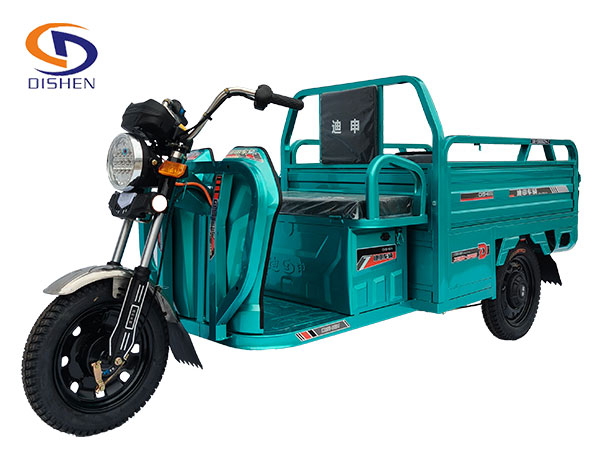
Caribbean buyers often start with a compact fleet and build up in several small batches. That makes standardisation more valuable than variety: one body, one battery option and shared consumable part numbers keep a small parts stock useful and make driver training straightforward.
Treat the first order as a pilot with a clear route description: trip length, stop frequency, the goods carried, where the vehicles are parked and charged, and how long a replacement part takes to arrive. Send those details with the enquiry and ask for one configuration that answers them, rather than a catalogue of options.
Because volumes are modest, ask which consumables should be held locally from the first shipment and which part numbers are shared across every unit in the order. Confirm that the charger model and plug type are the same throughout. Also discuss the battery and its transport conditions with the freight forwarder at the planning stage, since that is a question for the carrier and the documents rather than something to assume.
Storage and charging deserve explicit attention in an island operation. Ask how a unit should be prepared and checked after time in storage, how the cargo box drains in heavy rain, how connectors and charge ports are protected, and what routine inspection the supplier recommends. These details matter more to a small fleet than a long list of optional extras.
Each row below is a question to settle with a Cuba and Jamaica supplier, in the order that matters. Where an offer looks much cheaper than another, check the third column first: most of the difference comes from an unstated assumption about the road, the shift length or what is included in the crate.
| Decision | Starting point to discuss | What to verify before ordering |
|---|---|---|
| Fleet size | Small pilot batch, then repeat orders | One named configuration with part numbers shared across all units |
| Trip profile | Short routes with frequent stops | Trip length, stops per shift and loading method in the enquiry |
| Storage | Time in humid storage before commissioning | Supplier's recommended preparation and inspection steps |
| Payload | 400-900 kg class depending on configuration | Payload including body weight, with the assumed load distribution |
| Cargo box | Around 1,500 x 1,100 mm on published configurations | Internal dimensions, drainage and tie-down points for the real goods |
| Battery and charging | 72V LiFePO4 options, depot charging | Charger model and plug type identical across the fleet; charging window |
| Parts | Consumables held locally from the first shipment | Numbered parts list with quantities and expected replenishment time |
| Supply form | CBU, SKD or CKD | Crate plan, assembly steps and tooling included for a small batch |
These five checks take an afternoon and are worth doing before any deposit moves on a Cuba and Jamaica order. They tend to surface the gaps that only become expensive after arrival - an unstated body weight, chargers that do not match the batteries, or a parts list with no part numbers.
Ask for a packing list that names every configuration and every crate, and confirm the CBU / SKD / CKD form before production so the crate dimensions and any assembly steps are known in advance. For a small batch, a clearly numbered spare-parts kit and a consistent set of model and serial number records are more useful than a wide range of variants. Keep the configuration sheet, packing list and parts list aligned so a repeat order can be placed against the same specification.
One mistake worth avoiding. Using the pilot batch to try several body and battery variants at once. The fleet is small, but the parts stock immediately has to cover every variant, and the next order often reverts to one configuration anyway - leaving the first batch as the awkward exception.
Nothing here substitutes for a written specification for your own Cuba and Jamaica operation. Take the duty cycle from this page, put it in an enquiry, and judge the answer by how specifically it addresses the route and the load. The guides linked below cover the checks that follow a quotation.
These guides cover neighbouring markets with similar or deliberately different operating conditions. Use them to compare how a change in route, climate or replenishment time alters the specification you should ask for.
| Application | Power starting range | What must be confirmed |
|---|---|---|
| Compact urban delivery, lightly loaded | 1,000â1,500 W | Payload, stop frequency, level-road route, permitted speed and daily distance. |
| Cargo, retail or agricultural distribution | 2,000â3,000 W | Rated payload, road gradient, rough-road surface, gearing, controller and battery discharge capability. |
| Heavy-duty or frequent slope operation | Start evaluation at 3,000 W | Full-load climbing test, rear axle, brakes, suspension, tire specification and thermal performance. |
These are procurement starting points, not a blanket recommendation for every road. A higher motor rating alone does not establish range, payload, hill-climbing capability or legal road speed. The selected model should be tested under its rated load and actual route conditions.
Evaluate cargo tricycles for agriculture, retail and logistics; passenger tricycles for local transport; courier models for parcel routes; and urban street-cleaning models for municipal or institutional work.
LiFePO4 and lead-acid batteries can be compared by Ah, kWh, weight, charge time, maintenance, replacement supply, heat and humidity performance, and total lifetime cost. Ask for the exact battery documentation.
Confirm performance for hills, rough or unpaved sections, rain, humidity, dust, corrosion and high temperatures. Specify the daily charging window where grid supply is limited or unstable.
Plan spare parts, technician training, warranty evidence, charger handling and local repair capability before a pilot. Record route completion, loaded range, charging and maintenance data.
Discuss distributor supply and model MOQ · Download the product catalogue · Request a quotation
For compact, lightly loaded urban delivery, a 1,000â1,500 W configuration may be considered. For cargo work on rough roads, slopes or with frequent stops, a 2,000â3,000 W configuration is a more suitable starting range. The final motor, controller, gearing and battery must be selected from the actual payload, gradient, route distance and permitted speed; a power figure alone does not guarantee climbing performance.
Compare 72 V LiFePO4 and lead-acid options against daily distance, charging access, heat, humidity, maintenance skill, replacement availability and total lifetime cost. Ask for the exact Ah, kWh, weight, charger, warranty and transport documents for the selected battery pack. Do not treat a battery label such as graphene or long-life as a chemistry description.
Dishen supplies electric cargo, passenger, courier delivery and urban street-cleaning tricycle categories. Cargo-bed lengths include 1.3 m, 1.5 m, 1.6 m, 1.8 m, 2.0 m and 2.2 m. The 1.5 m and 1.6 m cargo-bed versions have no MOQ; other sizes normally require 50 units or one full 40HQ container, subject to the model and packing plan.
Start with representative vehicles for the intended applications, then record loaded range, route completion, charging time, maintenance events, road surface, gradient and customer feedback. Request separate freight quotations for the selected destination port; ocean freight, port charges and customs requirements change over time.
CBU, SKD and CKD options can be discussed. CKD may improve container-space utilization, but it requires local workshop space, tools, trained technicians, quality checks and parts management. Confirm the exact packing list, loading plan and local compliance requirements before ordering.
Dishen reports CCC certification in China and should provide the certificate covering the exact model. CE, EEC and ISO certification are not currently held. Destination import, road-registration and battery transport requirements must be verified with the importer, authorities and carrier for the exact configuration.
Reviewed: . Confirm specifications and destination requirements for the exact vehicle before ordering.