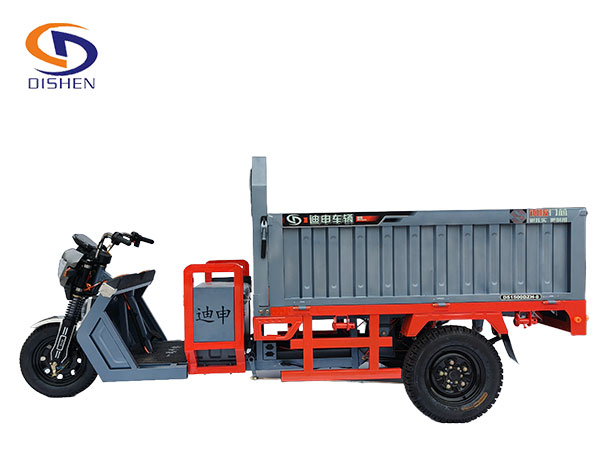
Electric Cargo Tricycles for Africa Commercial Transport
Dishen Technology is a China-based OEM manufacturer specializing in electric cargo tricycles for commercial transportation, logistics, agriculture, and last-mile delivery across emerging markets worldwide.
We provide OEM and customized electric three-wheeler solutions for distributors, wholesalers, fleet operators, and commercial buyers in Africa, Southeast Asia, the Middle East, Latin America, and South Asia.
One continent, several very different duty cycles
Treating Africa as a single market is the fastest way to buy the wrong vehicle. A distributor importing through Lagos and selling into dense urban delivery has a different problem from a wholesaler in Kampala, where every unit arrives after a long inland corridor and every spare part has a long lead time. Coastal markets are usually about congestion, stop frequency and cargo security; inland markets add gradient, corrugated surfaces and the cost of keeping a fleet running between shipments.
Road surface drives the mechanical specification. Paved city routes allow a lower, lighter chassis and a sealed courier box. Mixed urban and rural routes call for a reinforced frame, higher ground clearance, tyres chosen for puncture resistance rather than rolling resistance, and braking that remains predictable on a loose surface with a full load. Where routes climb, torque at low speed matters more than top speed, and the motor and controller should be specified together rather than chosen as separate line items.
Seasonal rain changes the economics of the cargo body. Open beds are easier to load and cheaper, but an enclosed or lockable box protects parcels, textiles and bagged goods from dust and rain and reduces losses on multi-drop routes. Many African operators run a mixed fleet: enclosed boxes for courier and retail distribution, open or reinforced beds for agricultural collection and market goods. Deciding the split before ordering is more useful than trying to specify one vehicle for every job.
Specification decisions for African routes
Read the table as a set of decisions to settle in order for Africa, not as a product comparison. For each row, ask the supplier what assumption sits behind their recommendation; two offers can quote the same payload while assuming very different road surfaces and shift lengths.
| Decision | Practical starting point | What changes the answer |
|---|---|---|
| Payload planning | 400-900 kg for short commercial trips | Cargo density, gradients, number of stops, road surface |
| Cargo body | Enclosed lockable box for parcels; open or reinforced bed for market goods | Weather exposure, theft risk, loading method |
| Battery | 72V LiFePO4 where cycle life and weight matter; lead-acid where upfront cost dominates | Charging window, ambient heat, replacement logistics |
| Frame and tyres | Reinforced frame, higher clearance, puncture-resistant tyres outside paved corridors | Proportion of unpaved kilometres in the weekly route |
| Braking | Specify for a fully loaded stop, not an empty-vehicle test | Gradients, wet surfaces, driver loading habits |
| Charging | Depot overnight charging with a defined shift pattern | Grid reliability, generator backup, fleet size |
| Spare parts | Model-matched consignment kit with controllers, brakes, tyres and lamps | Distance from port and time to next shipment |
Five checks to run before requesting a quotation for Africa
These five checks are worth doing before any money moves on a Africa order. They cost an afternoon and usually expose the gaps that become expensive after a container has arrived: an unstated body weight, an unmatched charger, or a parts list with no part numbers.
- Describe the worst weekly route, not the best one. Include surface type, gradient, distance and whether the vehicle returns loaded or empty.
- Confirm the payload figure is a rated working load with the intended cargo body fitted, not a bare-chassis figure.
- Ask how the battery is protected from heat and how the cells, BMS and charger are matched; get the cycle-life assumption in writing.
- For inland destinations, price the spare-parts kit into the first order. A controller or charger failure should not idle a vehicle until the next container arrives.
- Check who assembles the units at destination, what tools are needed, and whether assembly is covered by the warranty terms.
Packing, shipping and spare-parts plan for Africa
Most West and East African orders clear through coastal gateways such as Lagos, Tema, Mombasa or Dar es Salaam, with inland corridors serving landlocked destinations. Knocked-down packing is often used to improve container utilisation: beds are detached and flat-packed, frames nested, and wheels and front forks shipped separately. For long inland legs, specify corrosion and moisture protection for the cartons and confirm the packing list, because transit handling is usually harder on the packaging than the sea leg.
One mistake worth avoiding. A frequent mistake is to validate a vehicle on a paved route near the port and then deploy it upcountry. The pilot should include the worst surface and the heaviest load, and it should run long enough to reveal tyre, brake and fastener behaviour. A two-day city trial will not show what a season of corrugated roads does to a frame.
Where to go next when sourcing for Africa
Nothing here replaces a specification sheet for your own Africa operation. Take the route, load and charging figures from this page, put them in an enquiry, and judge the reply by how specifically it answers them. The guides below cover verification, costing and packing in more detail.
Country buying guides for Africa
The guides below narrow the regional picture down to a specific port, route and duty cycle. Open the one that matches where your vehicles will actually work, then use its worksheet when you request a quotation.
- Nigeria - the deepest country guide on the site, covering fleet economics and import steps
- Kenya - highland gradients, Mombasa clearance and upcountry service planning
- Tanzania - Dar es Salaam city routes versus corridor and transit operations
- Ghana - Accra-Tema retail distribution, humidity and short high-frequency routes
- Uganda - a landlocked supply chain, hilly routes and the first-order spares kit
Market Overview
Africa includes markets such as Nigeria, Kenya, Ghana, Uganda, Tanzania. Electric cargo tricycles are used where businesses need practical short-distance cargo transport with controlled operating cost.
This page is educational and intended to help importers, distributors, and fleet buyers compare electric three-wheelers with fuel vehicles and other small cargo vehicles.
Road Conditions and Local Transportation Challenges
Road conditions vary from paved urban corridors to rural roads with dust, potholes, mud, and uneven surfaces. Vehicle selection should focus on frame strength, tire choice, torque, payload stability, and spare parts planning.
Many buyers need low daily operating cost, practical payload capacity, easy maintenance, and flexible cargo body options for mixed urban and rural routes.
Business Applications
- Urban goods delivery
- Agricultural collection
- Courier parcels
- Market distribution
- Municipal utility work
Recommended Product Directions
| Use case | Suggested vehicle configuration |
|---|---|
| Courier and parcel delivery | Enclosed cargo box, lockable rear body, optional company color and logo, route range planning. |
| Agriculture and market goods | Open cargo bed or reinforced cargo body, higher payload planning, durable tires. |
| Municipal and facility services | Utility body, compact turning radius, service-friendly components. |
Related Buying Guides
For distributors and fleet buyers moving from market research to China OEM sourcing, see the China electric cargo tricycle wholesale and factory guide for procurement questions and quote preparation.
FAQ
Why are electric cargo tricycles suitable for Africa?
They support short-distance commercial transportation with lower daily energy and maintenance complexity compared with many fuel vehicles, especially when routes are predictable.
What buyers should evaluate in Africa?
Buyers should evaluate payload, route distance, charging access, road conditions, cargo body design, spare parts, and aftersales planning before ordering.
Which customer types are most relevant?
Relevant buyers include distributors, wholesalers, fleet operators, courier companies, agricultural buyers, municipal users, and commercial transport businesses.